
Search for topics or resources
Enter your search below and hit enter or click the search icon.
Let's be honest. Every nonprofit wants to raise more money. The challenge is figuring out which advice is worth following and which ideas belong in the fundraising equivalent of a junk drawer. After years of working with nonprofits large and small, we've found that explosive fundraising usually comes down to five things. In this guide, we'll walk through each one and show you how technology can help turn good fundraising into great fundraising.

Here's what we'll cover.
You’ve heard it all before, right? You know how nonprofit fundraising works. And there’s not an auction or fun run you’ve met that hasn’t raised money, so you’re just fine, thankyouverymuch.
That’s fair. Those events do work.
But what if we told you there’s a secret list of steps to explosive fundraising?
There is. And the secret pulls together a lot of things you might already have – like technology and a powerful mission and a lot of passion – with things you might not have, like understanding the immense power of marketing attribution and reporting and shifting your fundraising paradigm and learning about how the right technology can be the biggest secret weapon of them all.
CharityEngine has been working with nonprofits of all sizes for the past decade, and our technology and expertise have combined to transform the fundraising of charities large, medium, and small.
No matter where you fall on the spectrum, this guide will give you best practices, actionable advice that addresses the biggest challenges most nonprofits face – and details the easiest, most cost-effective way to solve them.
Time and time again, clients come to us looking to solve a problem or enhance a result. And we’ve helped these clients—the biggest and the smallest—raise billions of dollars to, quite literally, change the world. From Rescue Village and the animals they save, to Research!America and its advocacy efforts, to the Wounded Warrior Project, MD Anderson Cancer Center, and Easterseals, we can assure you that the money our clients have raised has had an impact.
That’s just to reassure you that we’re a reliable source for mind-blowing fundraising secrets.
And when we have a new client looking for knock-your-socks-off fundraising, we’ve learned that there are five steps, or areas of focus, that form the foundation of effective fundraising.

When you have these five things in place, we’d go so far as to say you can’t do anything other than see explosive results. They form the most solid foundation a nonprofit can have.
In this guide, we’re going to look at each one of the five steps. We will share real-life client stories and tell you our approach to helping clients succeed. Knowing how CharityEngine approaches these foundational fundraising steps will educate you, hopefully inspire you, and give you solid questions to ask of your technology vendor.
“Duh,” you’re saying, “Doesn’t take a fundraising expert to know that.”
True!
But let’s talk about how you create and execute campaigns that raise more money.

The most critical component of successful fundraising is running omnichannel campaigns.
Some clients assume that a multichannel campaign means television ads. And to be fair, we talk about Direct Response Television campaigns our clients, like Wounded Warrior Project, have run with great success – and for big fundraising numbers. TV ads are a potential channel.
For most nonprofits, though, you’re not launching TV ads. What are the channels you’re most likely to use?
Direct mail isn’t dead. In fact, one of our largest clients drives a whopping 80% of its revenue through direct mail! Direct mail is the little black dress of fundraising, because you can use it in so many ways. And it can be the foundation of a solid omnichannel campaign.
If you’re looking for ideas, you can send a letter with a link to your donation page. You can send a postcard with a QR code that lets them donate. You can send a direct mail piece with an offer to text a number to enter a lottery for tickets to an event. It’s easy to get creative! And according to the Association for Fundraising Professionals, direct mail is appealing to younger donors because it's a novelty! It must seem a little retro to them.
In a world that’s increasingly AI- and Zoom- and remote-work-focused, any channel that brings a feeling of a human, personal connection will make a difference.
If direct mail is a little black dress, then email would be the sparkly shoes – can’t really have one without the other. Email is another foundational element of an omnichannel campaign.
Make sure your CRM offers email automation, and you’ll sound like you really know your stuff if you question the presence of “if-then” logic. If your email partner says you’ve got that, you’ll know if you have a good email partner.
Let’s look at a few different aspects of email. See how your solution stacks up!
Email automation means you can enroll your prospective donors in sequences. We’ve written about how email marketing for nonprofits (including how often to email your donors) and have also offered a few takes on a fundraising email template for nonprofits.
If-then logic is also referred to as conditional logic. It means that you can program your emails to change the content based on the response. For example, you send a fundraising email to 100 people. (We hope you send it to a lot more than 100, but let’s keep the math easy.) Let’s say 70 click on your donation link, head to your page, and donate. The logic would say, “If this person donates, then send them the automated thank-you email and unenroll them from the rest of the email series.”
Let’s say 10 open the email but don’t take any action. They would continue in the original sequence, which might proceed with impact stories, move to stories of growing need, and then ask for a donation again.
What about the few that clicked but didn’t give? They could be sent to an abandoned donation sequence with different messaging.
And let’s say two click “unsubscribe.” You know what to do then.
You get the picture. When you thoughtfully create a sequence for each recipient of an initial email, you personalize the donor experience and increase the chances of a donation.

A WYSIWYG editor is key to your email software. Not only is wysiwyg a fun word to say, but it also means that you can type an email like you’re really typing an email. Some systems ask you to mess with code or markups, and that isn’t the easiest way to get your work done. When you can drag and drop logos and photos and change the font of words right on the screen, it’s a benefit.
Artificial intelligence is the buzzword these days. As we noted at the top of this guide, sometimes you don’t want to leverage it. But sometimes you do, particularly when you’re a busy nonprofit trying to write emails, grant proposals, fundraising letters, and social media content…all before 9 am on a Tuesday. Then? AI is your BFF.
See if your CRM uses AI at all. CharityEngine has integrated the email tool with ChatGPT to make writing emails, letters, etc. faster. You can type “write a fundraising email about the plight of the bumblebee bats” and then choose your tone (the best is “go crazy”) and the editor will quickly generate the copy. You review and edit it, then use it. Voila…easy!
These aren’t the only important things about your email provider, but they’re some headlines to consider.
Think of all the ways you can use the phone to help your campaigns! It’s a little old school, but it really zeroes in on that personal connection we talked about.
One of our clients called her staff in on a Saturday, and they pulled the phone numbers of top donors from the CRM. Then they went down the list, calling to thank each one personally. They did not ask for a donation.
Donations skyrocketed anyway.
In an omnichannel campaign, you can send a direct mail piece that includes a URL to a donation page and a phone number donors can call to provide credit card information.
When you plan your next omnichannel campaign, brainstorm creative ways you can utilize phone calls. Certain audiences will respond particularly well to phone calls. Later on, we will talk about segmenting your lists and targeting each with the appropriate outreach.
Text-to-give campaigns are a highly effective channel to reach your donors. And do we mean reach – you can text thousands of phone numbers in an instant (as long as you have their permission).
Think of the Red Cross, which is an easy example everyone has experienced. In a disaster, you can text REDCROSS to 90999 and you’ll automatically give $10 to American Red Cross Disaster Relief. The charge appears on your wireless bill. It’s not being dramatic to say they’ve raised zillions of dollars with this campaign.
Now, we’re not saying you’re the Red Cross, but you’ve gotta think they’re on to something with texting for zillions of dollars.
We’ve told you about this before, but mobile as a strategy is a smart strategy indeed. And when you make it part of an omnichannel campaign, zillions get a little closer.
Our clients will often send a text that includes the call-to-action of “Text the word ‘donate’ to give now.” The donor texts the word, and they’re sent to an online donation form.
You can get wildly creative here and can even “brand” a special number or word that will be affiliated with your nonprofit.
It’s probably not awesome to admit, but we all look at our phones more than we should. And studies have shown that you respond to texts faster than to emails. Catch your donors where they are.
We’re going on and on about this, but one last thought. Your year-end campaign is always the time to go big. Texting can help you add urgency to meet a deadline, even if that deadline is midnight on New Year’s Eve. Everyone gets caught up in a “Three more $25 donations and we will reach our goal!” party atmosphere, so use it to your nonprofit’s advantage.
Let’s step away from channels and talk about where those channels lead: donation forms.
Don’t sleep on good donation form etiquette! Yes, this talks about what CharityEngine forms can do, but it will also give you ideas for your forms.
What’s the advice for good nonprofit forms? Make it easy to give! Here are a few ways to consider:
When you’re crafting a campaign, consider anchoring it around an event. Your mind might go to a black-tie gala or an auction featuring getaways to Bora Bora, both of which are amazing fundraisers.
But if you don’t happen to know anyone with a house in Bora Bora, or don’t own a tux, does that mean events are off the table?
Nope.
On the contrary, the bread-and-butter events our clients love are much easier to pull off. Many of our clients use our peer-to-peer module and get pretty creative.
For example, this client has a "Bubble Blast 4 Kids" event.

Another client uses a kids' concert as their main event.
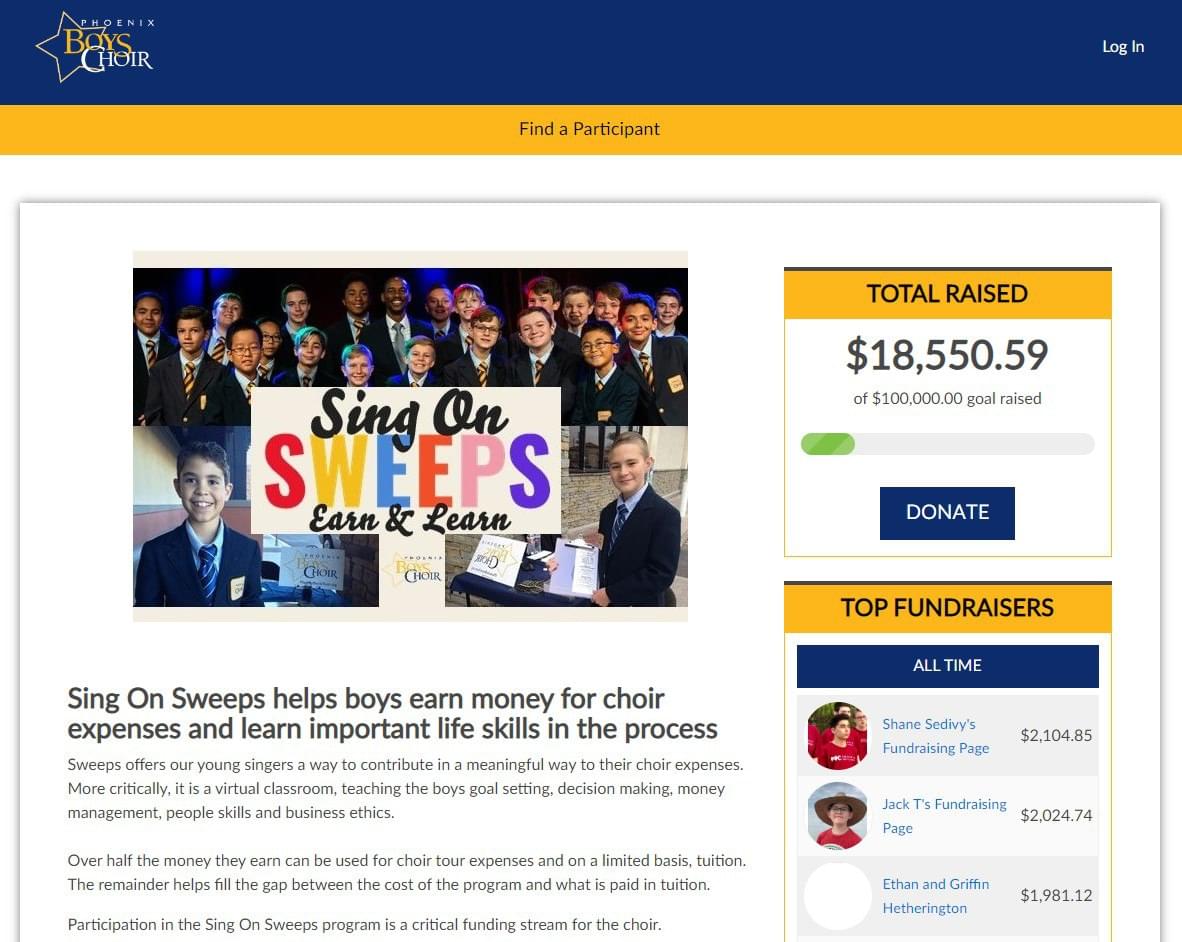
As long as you have the right software, adding a fun run, a bake sale, a food drive, or another event is easy. Make sure you can set up the event, get real-time data showing progress toward your goal, and click into different team members to see their results.
Nonprofit events are particularly wonderful for fostering a personal connection with your donors. And remember, we’re talking multichannel, so you’ll want to promote your events across channels to reach the largest possible audience.
Track, Measure, Repeat.
We’ve recently begun beating the drum about a different concept: digital marketing for nonprofits. The idea is that when you approach fundraising, you’re looking at the same goals as a marketer.
If (conditional logic!) marketing goals and nonprofit goals are similar, then it stands to reason that marketing principles can be applied to fundraising. And they can be!
It’s called moves management, and it means tracking a donor's moves to more effectively reach and nurture them. Effective moves management tracks donors throughout the donor lifecycle to see what’s working.
For example, donor attribution. This simply means assigning credit to the different channels your donor touches. If you’re running an omnichannel campaign, wouldn’t it be helpful to know if your direct mail is significantly more successful at engagement than your texts?
Donor attribution is a big secret to smart fundraising. When you know how to reach your donors most effectively, your fundraising numbers will rise. And your donor engagement will skyrocket, too.
Once you’re tracking where your donors come from and measuring which channels are most effective, see if your CRM offers comprehensive dashboards. When you can see donations come in in real time, and you can see which channels are most effective, you’ve got everything you need at your fingertips.
Many times, nonprofits like email. Or they’re wedded to direct mail. They might get crazy and use email and mail together, but that’s not a multichannel campaign. A true multichannel campaign, which is what we’re recommending, is created across channels, so you use all of them at the same time. When you’re running a truly omnichannel campaign and tracking and measuring your results for each channel, you’re increasing engagement with current donors, increasing reach with potential donors, and raising more money for your cause.
One of our earliest clients has grown exponentially since its inception. And while many factors have influenced its success, almost everyone on the leadership team would talk about its insanely successful monthly giving program.
There are several ways technology can help you build a program that makes a difference. When you get serious about building your program, talk to your CRM vendor and make sure the tech will support you.
In particular, look for:
What does 10% in lost dollars mean to you? Running some back-of-the-napkin numbers, we’d estimate (conservatively) that a smaller nonprofit would lose $300,000 per year. A medium-sized nonprofit could lose $1.3 million, and an enterprise nonprofit is looking at $2.5 million lost. Those are some seriously high numbers to leave on the table!
Not to brag (but we’re kinda excited about it), but CharityEngine’s collection rate is 99.86%. We were shocked to realize that so many intended donations weren’t collected, and we set out to build a different system.
This benefit includes expiration dates, too. The system talks to the major credit card companies and automatically updates the expiration date, without any interruption to the donor.
Ensure your payment processor offers this feature to hang on to your 10%!
There are two features of CharityEngine’s software that specifically help with sustained giving. We’re sharing them here so you can see what’s possible and ask educated questions when you shop.
This out-of-the-box benefit offers a customizable series of emails that can be triggered by an event. For example, let’s say Donor Dave hit the limit on his credit card (not good, Donor Dave) and his monthly donation is declined. A series of emails might look like this:
We’re being a little silly, but you get the idea. The emails can say anything you want but it gives a donor many chances to remain in the monthly giving program.
(And before you Google it, bumblebee bats really are in danger of extinction!)
Nonprofits can’t be successful without donors, and behind every donation is a person. Those people are the reason your nonprofit can make a difference.
When you think about donor stewardship, put yourself in your donor's shoes. Hearkening back to our thoughts around marketing principles, it’s a good time to think about donor personas.
Can you imagine how many different types of people your donors represent? They can be old and young, moms and dads or grandparents, active veterans or retired schoolteachers or someone who just loves animals. It can seem as though it’s a huge group of wildly different people!
And while it is, there is commonality. They care about your cause. They have enough income to consider charitable donations. They’re the type of person who makes charitable donations.
If you asked, you’d find more similarities and some important differences. We recommend taking the time to create donor personas.
On an effort scale of one to five, this is like a three and a half. It will take a little time and effort but the results will shape your fundraising.
How do you create donor personas? There are some simple steps:
Maybe Fundraising Fran is a California girl who is in her mid-twenties and saw adorable bumblebee bats on TikTok and wants to save them because her friends are all talking about them and wanting to help them. They’re trendy! She gets a bonus from her tech job every year and donates $500 around the holidays. She follows social media channels that work to save endangered animals.
See what we mean? Then craft a plan of action for each persona. You could, for example, segment your donors and plan an omnichannel campaign that hits each segment the way that will resonate with them. Donor Dave would get direct mail, and Fundraising Fran would get social media posts. Personas allow you to understand the motivations of each donor – why they support your mission – and you can tailor your messaging to appeal to them. Dave might get facts about extinction and how donations can preserve the habitat of the bats. Fran might be targeted with images of the bats and quick facts that will compel action.
This personalizes your messaging and makes your donors feel seen and appreciated.
Every one of your donors should hear from you regularly. If your CRM offers marketing automation (and it really should or you’re working much harder than you need to), set up a few communication series for smart, personalized outreach.
For example, a multichannel welcome series might look like this:
That’s one series that you can set up to be triggered when someone donates.
Another series would pick up where this one left off and would nurture Fran right through the end of the year.
It’s about regular communication that doesn’t drive anyone crazy but keeps your mission top of mind. The times you don’t ask for a donation are the building blocks of your relationship, so don’t skip them. Most people get weary of constant asks, so sprinkle in some feel-good stories about the results of the work you do because of donors.

It’s become increasingly common, and increasingly expected, that people can manage a lot of accounts online without reaching out for help. Donors aren’t any different.
If you want to save your staff a lot of time (and therefore save your nonprofit a lot of money) and enhance your donor relationships, offer a donor portal. They can log in and update information or preferences, download tax receipts (you just got a bunch of time and money back if you’re not mailing those guys), or even register to volunteer or attend events.
Once you set up your donor portal, make sure the changes people make are automatically updated in your CRM.
This isn’t very sexy, but it’s important. See if your CRM offers case management tools.
What is this? It’s task-management software. When donors have requests, they’re entered and assigned to different team members. Notes can be made, and resolutions can be noted.
The benefits are obvious: all team members have access to the same information, and nothing falls through the cracks. The other benefit is that you’re caring for your donors and strengthening that bond.
This one might be obvious, but thank your donors often and in many ways. If your CRM offers batch acknowledgments, you can set up workflows to thank a bunch at a time.
Remember way back in chapter 1 (it seems like a long time ago, doesn’t it?!), we told you about a client who had her team spend a day calling and thanking donors? They didn’t ask for a penny, but donations went up.
Use every channel you’ve got to say thank you. Send memes or emojis or virtual hugs, but let your donors know you adore them.
Building strong relationships with your donors is a surefire way to run a successful nonprofit. Have donor appreciation days and profile different donors on your website or social media. Host a reception with your board so your most loyal local donors can be thanked in person. Pick some names out of a hat and send donor surprise boxes of branded swag, like a tote bag or water bottle. Offer tours of your facility.
Bring your donors close, and chances are good they’ll never leave.
Payment processing can be one of those subjects so complicated and wrought with technicalities that it can be tempting to pull the covers up over your head and go back to sleep.
You can learn the basics of payment processing, but even that can be a little more in the weeds than the average nonprofit wants.
We’d suggest there are just a few things you need to know to make a smart decision about your payment processor.
That’s step 1: figuring out what suits your nonprofit. Step 2 is asking the right questions about usability and donor data security.
This list isn’t complete, but it’s a good start.
Remember how we said to make giving easy? That’s what we mean, specifically for the process of donating. How can your payment processor make giving frictionless?
If your donor lands on your donation form but then must create an account and log into a third-party system, that’s not making giving easy. And it’s not necessary: the technology exists to use one-click giving, where your system recognizes repeat donors (and their payment information) and fills in the blanks so they can, literally, give in a click.
If you have access to a mobile swiper, take that to events with you. Using it means you can accept donations on the go with the tap of a credit card.
Are you noticing themes throughout this guide?
Yes, we’re focusing on the five things nonprofits need to succeed, but we’re also talking a lot about making it easy for donors to give. Making donors feel appreciated. Keeping their data safe. These are basic tenets that can get swallowed up in the stress of daily life, so it’s a good reminder that they’re the core of your donor relationships.
There are five things, we said, that every nonprofit needs. When all five things are firing on all five cylinders, it’s the perfect recipe for the most amazing, explosive fundraising ever.
Throughout, we’ve talked about the importance of technology. We’ve shown you how CharityEngine does things, so you’ve gotten a peek at one solution. You can use that information as research and a resource when you investigate other nonprofit CRMs.
Now for number five. If your nonprofit has this, or has the right one, all four of those previous things will be easy.
Your CRM is, at its core, a donor database. No matter what bells and whistles you pile on, it’s still got to record and maintain information about your donors.
And this may be a little naïve, but we can’t imagine there’s a CRM that can’t help you manage your donors. An Excel spreadsheet can help you manage your donors.
But when you’re investing in a CRM, make sure it’s powerful.
There are a few hallmarks of a strong system:
There are a few other considerations to keep in mind when describing a great donor database.
There are two schools of technology thought, and both are right and good for different nonprofits.
The benefit of a CRM that offers native tools for most of the functionality a fundraiser needs is simple: all your data is in one place. And that means that your system has a nice big pool of data to apply AI and logic and spit out insights for you. There’s no syncing, there’s no data lost, there’s no delay.
If your CRM updates in real time, you have the added benefit of complete, accurate data. Always.
Why then, if that’s so great, would we say integrations are also great? Simple. Some of our biggest clients use CharityEngine but still have an industry-specific or otherwise necessary third-party system they need to integrate to fundraise effectively. For these clients, we have public APIs (which are somewhat like the password and handshake you needed to know to get in the tree house when you were younger) that make connecting to the software a breeze.
Artificial intelligence is the coolest thing around, but it’s not new. We’ve used AI in our CRM for years. It’s cool, though, to use it in new ways, like the Chat GPT email integration we talked about.
One way we’ve used it for years is to calculate giving probability. Our system scans tens of thousands of real-time data points to let you know the best time to reach out to a donor, the best manner, and what to ask for.
We’ve plugged AI into our fraud prevention, too. Make sure your CRM vendor includes AI so you’re leveraging the latest technology to increase fundraising.
If payment processing isn’t sexy, data hygiene also falls into that “not sexy but an important subject” category.
Hopefully, we’ve imparted the importance of data – getting it, managing it, keeping it all together so it talks, analyzing it.
But if your data isn’t clean, none of that matters.
What are some ways you can keep your data clean?
What are some ways technology can keep your data clean?
When your data is clean, your reporting is accurate. When your reporting is accurate, your observations, conclusions, and fundraising strategies are more likely to be spot on. It might not be sexy, but it’s important.
Shaking up your fundraising doesn’t mean getting rid of everything you’re already doing. Rather, it’s an invitation to look at fundraising and campaigns through a different lens. Seeing the five pillars of a successful fundraiser offers a checklist for your nonprofit and a road map to move forward. And if you’re curious about how our fundraising software can help your nonprofit, just give us a call.


